
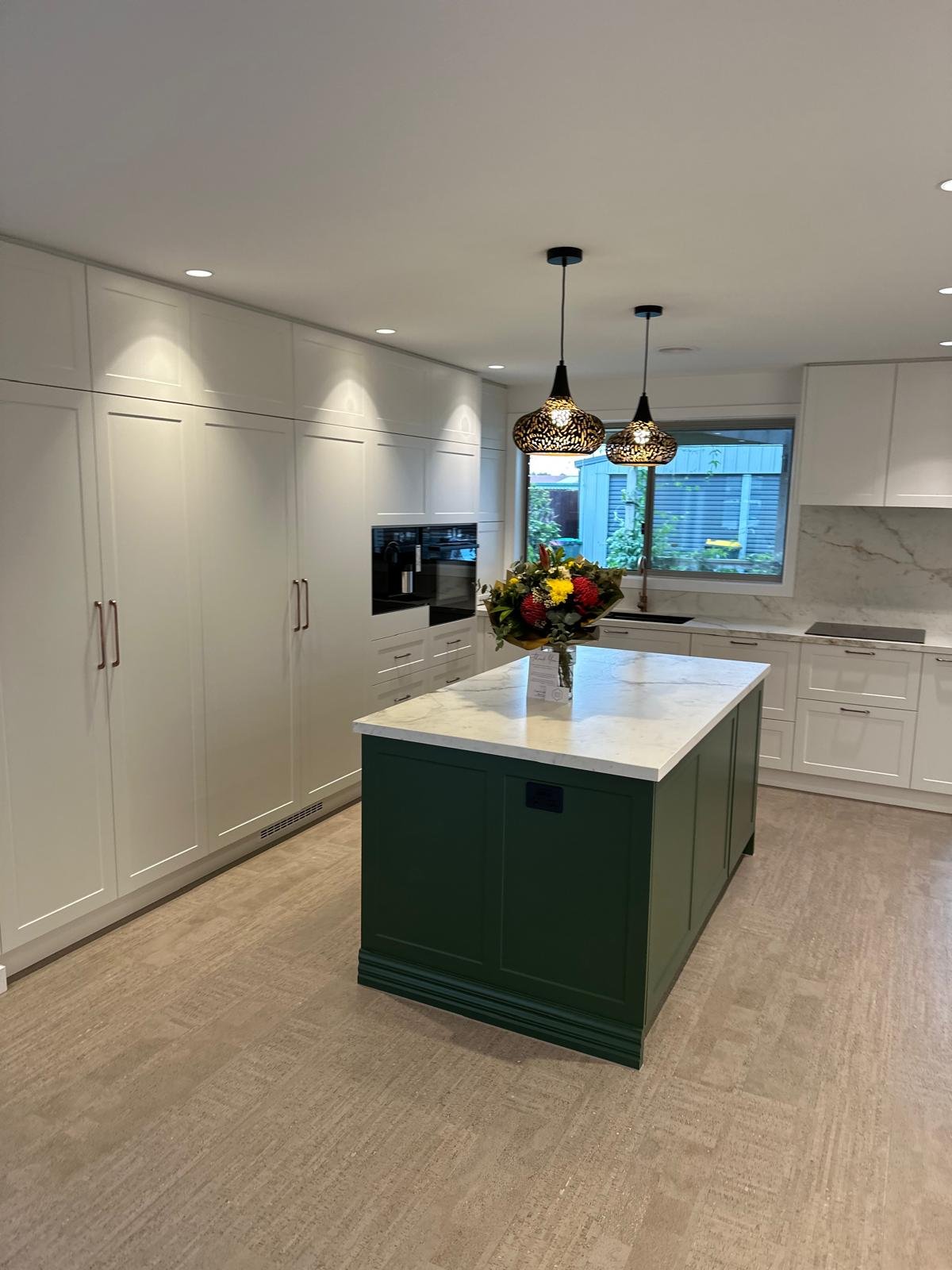
People building a new home tend to think the kitchen is a late-stage decision — pick the cabinetry, choose the splashback, done. By that point, half the important decisions are already locked in by the slab, the rough-in, and the framing. Get the early-stage stuff wrong and you will be living with the compromises for as long as you live in the house.
Here is what actually has to be decided in the first month of design, not the month before lockup.
Plumbing rough-in — locked at slab stage
The drainage points for the sink, dishwasher, and ice-maker fridge come up through the slab. Once concrete is poured, moving them is a small destructive job. Things to confirm before slab pour:
- Sink position — including whether it is on the island or against a wall
- Dishwasher position — usually next to the sink for the same drainage run
- Whether the fridge gets a water line for an ice-maker / chilled water
- Whether you want an instant boiling water tap (needs a separate cold-water line and undersink unit space)
The biggest one people forget — if you want a sink in the island, the slab needs the drainage point in the right spot. Adding it later means cutting and re-pouring slab section, which nobody wants.
Electrical rough-in — locked at frame stage
Once the wall sheeting is on, adding electrical points means cutting holes and patching. So the electrical plan needs to be sorted while the frame is still open. Modern Australian kitchens need a lot of points:
- Cooktop circuit (gas igniter or full electric/induction)
- Oven circuit (separate from cooktop in most cases)
- Rangehood circuit + ducting path
- Microwave (built-in or shelf — different power needs)
- Fridge — dedicated outlet ideally
- Dishwasher
- 3-4 bench-level outlets for kettle, toaster, coffee machine, blender
- Pendant lights over the island — each needs a fixed point in the ceiling
- Under-cabinet lighting
- Switch positions (so you are not walking around the island to turn on the kitchen light)
This list adds up to 12-18 separate points. Underspeccing the electrical plan is the most common new-build kitchen regret.
Layout and traffic flow
The classic kitchen triangle (sink, cooktop, fridge) still matters even in modern open-plan builds. Two practical rules:
The path between the cooktop and the sink should not be a thoroughfare. If the kids walk through that line on their way from the lounge to the back door, you will be dodging children with hot pans every dinner time.
The fridge should open without blocking the only walkway. Sounds obvious. People still get this wrong because the fridge looks like it fits the cabinet space until someone opens the door 90 degrees and finds out it blocks the corridor.
The pantry decision — walk-in vs butler’s vs cabinet
This is mostly a layout question disguised as a storage question.
Walk-in pantry — needs at least 1.2m × 1.5m floor space. Best for big families or anyone who buys in bulk. Adds about 4-6m² to the kitchen footprint.
Butler’s pantry — separate space behind the main kitchen, usually with a second sink and bench. Great if you entertain and want to keep mess hidden. Adds 6-12m² and notable cost.
Tall cabinet pantry — internal pull-outs make this surprisingly capable. Saves the floor space for an island or extra benches. Best for couples and small families.
The wrong choice is overspending on a butler’s pantry that you only use to hide a microwave you never wanted on the bench in the first place. Be honest about how you actually cook and entertain.
Why builder coordination matters more than spec sheets
The kitchen depends on three trades hitting the same dates — plumber, electrician, cabinet maker. The cabinet maker can only template once the slab is finished and the walls are square. The electrician can only finalise points once the cabinet maker confirms layout. The plumber needs to be ahead of both for slab rough-in but back again for fitout.
If your builder is doing the trade coordination well, all of this happens invisibly. If they are not, you are the one chasing tradies and apologising to the cabinet maker because the electrician put the rangehood point in the wrong spot. Pick a builder who runs the trades, not just one who sub-contracts and hopes.
Iconic Homes and Construction handles new home builds in Brisbane and the Gold Coast and runs the trade coordination in-house — which means the kitchen sequencing actually goes to plan rather than being someone else’s problem.