
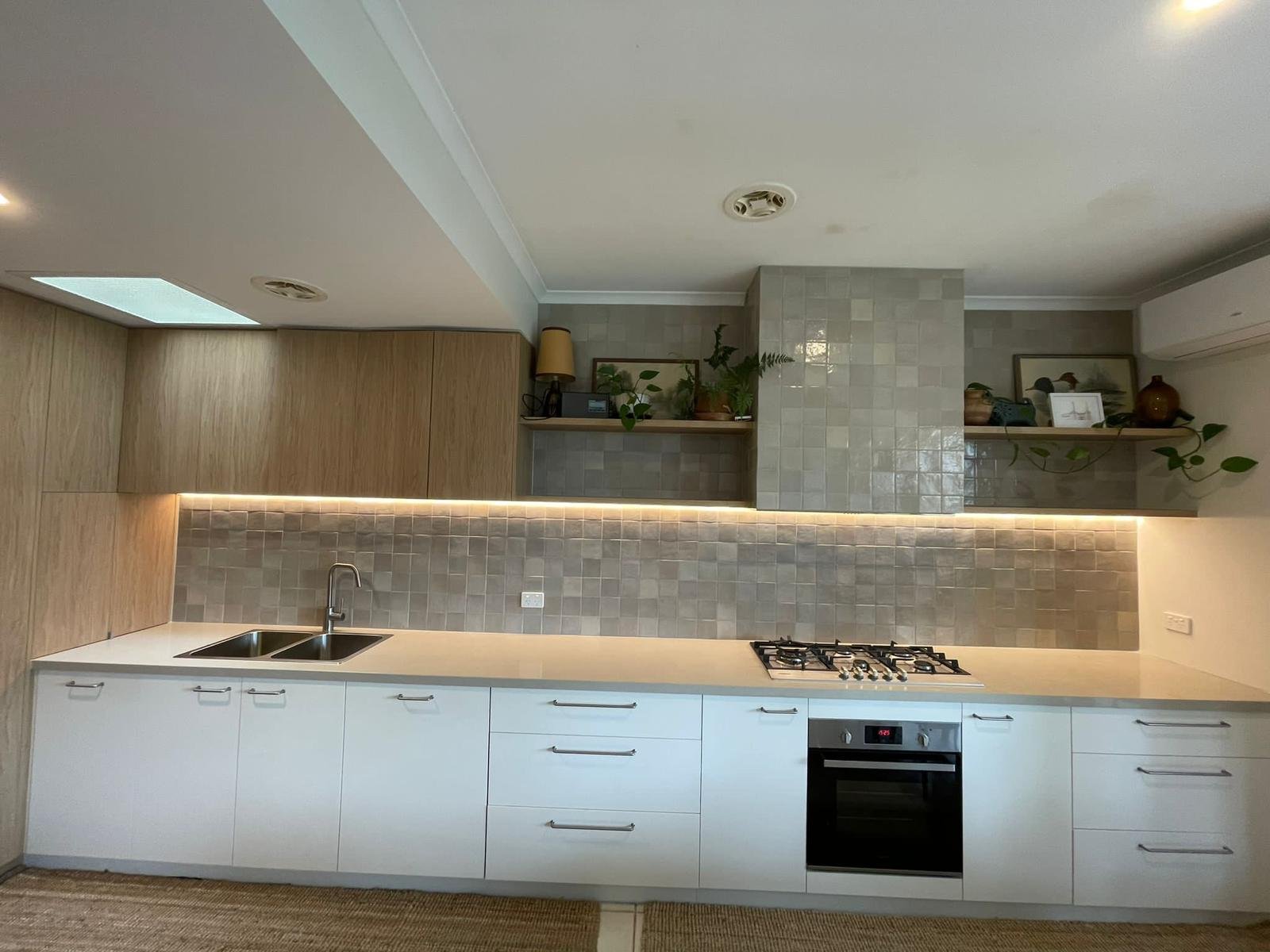
The splashback is the most-looked-at surface in a kitchen and the one that takes the most abuse. Oil splatter, steam, hot water, occasional pasta sauce volcano. Picking the wrong material or installing it badly turns into a daily annoyance you cannot unsee.
Here is the practical guide to what works in Australian kitchens, what to avoid, and what your tiler should be telling you that they often skip.
Material — what actually performs
Subway tiles (ceramic or porcelain)
The default for good reason. Easy to clean, hard-wearing, plenty of style options, won’t date as fast as you think. Bevelled edges add depth, flat profile looks more modern. Worth paying for porcelain over basic ceramic — porcelain absorbs less, stains less, and stays whiter longer in a busy kitchen.
Large-format tiles (600x600mm and bigger)
Trending hard in modern Australian kitchens because they look like stone slabs without the cost. Fewer grout lines means less cleaning. The catch — they are heavy, harder to install, and any tile that cracks is a much bigger replacement job than a 100x300mm subway. Get a tiler with experience in large-format work, not a generalist.
Glass
Looks great when new. Wipes clean. Reflects light and makes a small kitchen feel bigger. Downsides — every smudge and water mark shows, and once it cracks (usually from impact, not heat) it is a full replacement of the panel. Also expensive compared to tile.
Stone slab (marble, granite, engineered stone)
Looks luxurious. Marble specifically is high-maintenance — it stains from anything acidic (lemon juice, tomato, red wine) within minutes if it is not sealed perfectly. Engineered stone is more forgiving but check current state regulations on engineered stone in your state, as some have introduced bans or restrictions on certain types.
What to avoid
Mosaic tiles for the splashback behind a cooktop. Too many grout lines, too small to wipe clean of oil splatter, every cooking session leaves residue you have to scrub. Use mosaics as a feature strip, not the whole splashback.
Pure white grout in a kitchen. Looks beautiful for six months, then permanently grey-yellow no matter how much you scrub. Use a slightly off-white or grey grout for kitchens — looks the same from a metre away, looks much better at a year.
Painted MDF or gyprock with a “splashback paint” finish. Tempting because it is cheap. Will fail within 18 months — water gets through the paint, swells the substrate, and the whole thing has to come out. Cheap upfront, expensive at the rebuild.
The install details that matter
Three things that separate a splashback that lasts twenty years from one that needs redoing in five:
Waterproofing behind the tiles, not just sealing the grout. The wall membrane should be applied before the tiles go on, especially behind the sink. Without it, slow leaks behind the tiles cause mould inside the wall cavity that you cannot see until it is bad.
Silicone, not grout, where the splashback meets the bench. The bench moves slightly with temperature changes. Grout cracks at that joint within a year. Colour-matched silicone flexes and seals.
Adequate edge protection at the cooktop sides. The vertical face of the splashback at each end of the cooktop takes the most heat. Quality trim or bullnose edge stops chipping and water ingress.
If you are in Brisbane and want a tiler who will take you through these decisions properly rather than just slap whatever you bought on the wall, Brisbane’s Best Tilers and Bathroom Renovations handles splashback tiling as part of their kitchen reno work — they bring up these details before you commit to a material.
Budget reality check
Australian kitchen splashback budgets, all-in (tile, grout, install, silicone, waterproofing) for a standard 4 metre kitchen run:
- Basic ceramic subway: $1,200 – $2,000
- Quality porcelain subway: $1,800 – $3,000
- Large-format porcelain: $2,500 – $4,500
- Glass: $2,800 – $5,000
- Stone slab: $4,000 – $9,000+
Anyone quoting much under those numbers is cutting corners somewhere — usually waterproofing or trim work. Worth knowing what you are paying for.