
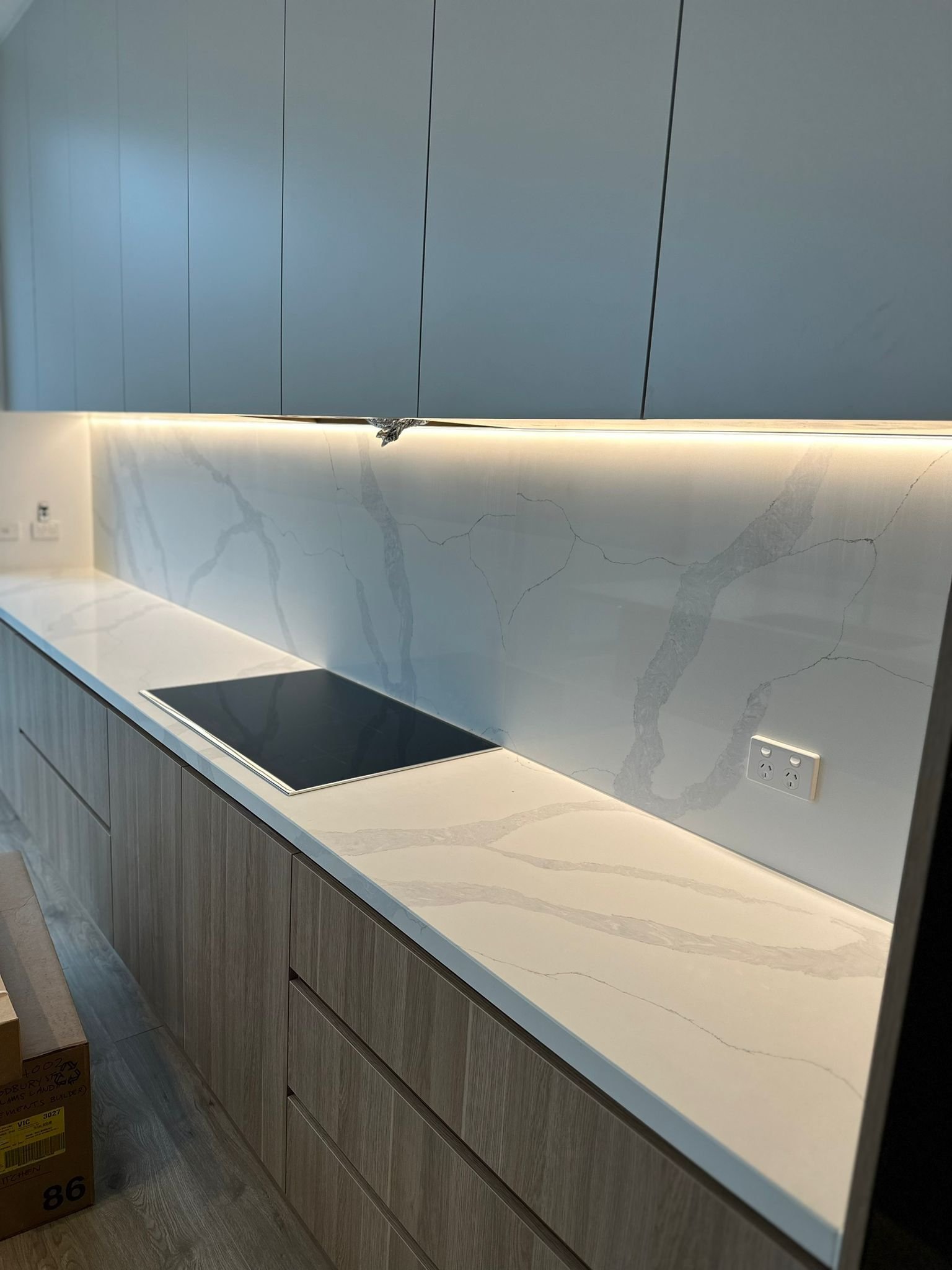
Induction cooking is fast, efficient, and easier to keep clean than gas. The downside nobody mentions in the appliance store: the wiring requirements are real, and most kitchens that have only had a standard electric cooktop are not set up for it. Doing the install on a cooktop your switchboard cannot properly supply is the most common cause of induction cooktops underperforming or tripping.
Why induction draws more than a regular electric cooktop
A typical 4-zone induction cooktop runs at 7,200 watts when you turn all four zones on at high power. Some 5-zone or wide-format models hit 11,000 watts peak. To put that in context, a regular ceramic electric cooktop is around 6,000 watts max. The difference matters for two reasons.
First, the circuit needs to be sized for the peak load — usually a dedicated 32-amp circuit. Second, the wiring from the switchboard to the cooktop needs the right cable size (usually 6mm² conductor). Anything thinner heats up under sustained load and creates a fire risk.
What the electrician actually has to do
For a proper induction install in an existing kitchen:
- Run a dedicated 32-amp circuit from the switchboard to the cooktop
- Use 6mm² cable (or larger depending on run length)
- Install an isolation switch in an accessible spot — usually under-bench, sometimes wall-mounted near the cooktop
- Hard-wire the cooktop into the isolation switch (not a plug-in connection)
- Test the circuit, label the breaker, and issue a Certificate of Electrical Safety
If your switchboard does not have spare capacity for a 32-amp circuit, the electrician also needs to assess whether the main supply can handle the additional load. Some older homes in Australia were originally fed with 32 or 40 amps total — adding a 32-amp cooktop circuit on top of existing loads can mean a main upgrade is needed too.
If you are in NSW or south-east QLD and need this assessed properly, ELECTRX Electricians handles induction cooktop installs and switchboard upgrades — including the load assessment so you do not get a surprise mid-install.
The cookware question
Often forgotten until install day. Induction only works with magnetic cookware. Stainless steel sometimes works, sometimes does not — depends on the alloy. Cast iron always works. Aluminium and copper do not work without an induction-compatible base.
Quick test: stick a fridge magnet to the bottom of your existing pans. If it sticks firmly, that pan will work on induction. If it falls off, it will not. Plenty of Aussies discover their entire pot collection is incompatible the day the cooktop arrives. Budget for replacement cookware as part of the install — a decent set of induction-ready pans is $400-$800.
Common installation mistakes that cause problems later
Sharing a circuit with the oven. Tempting because the wiring is already there, but most ovens are on a 20-amp circuit which is too small for both. The cooktop will work fine until you cook a Sunday roast and try to boil pasta on the cooktop simultaneously — then everything trips.
Skipping the isolation switch. Required by Australian electrical standards. If you ever need to service or replace the cooktop, you must be able to isolate it from a switch within reach. Some sparkies still skip this on quick installs — do not let them.
Insufficient ventilation cutout. Induction cooktops generate heat in their internal electronics. They need clearance below (usually 50mm) and side ventilation. Cabinets that cocoon the cooktop too tightly cause overheating and reduce the lifespan of the unit.
Get the install right once and induction is a great cooking experience for fifteen years or more. Skip the wiring upgrade and you will have years of frustration over a tripping breaker — and probably the eventual cost of redoing the install properly anyway.